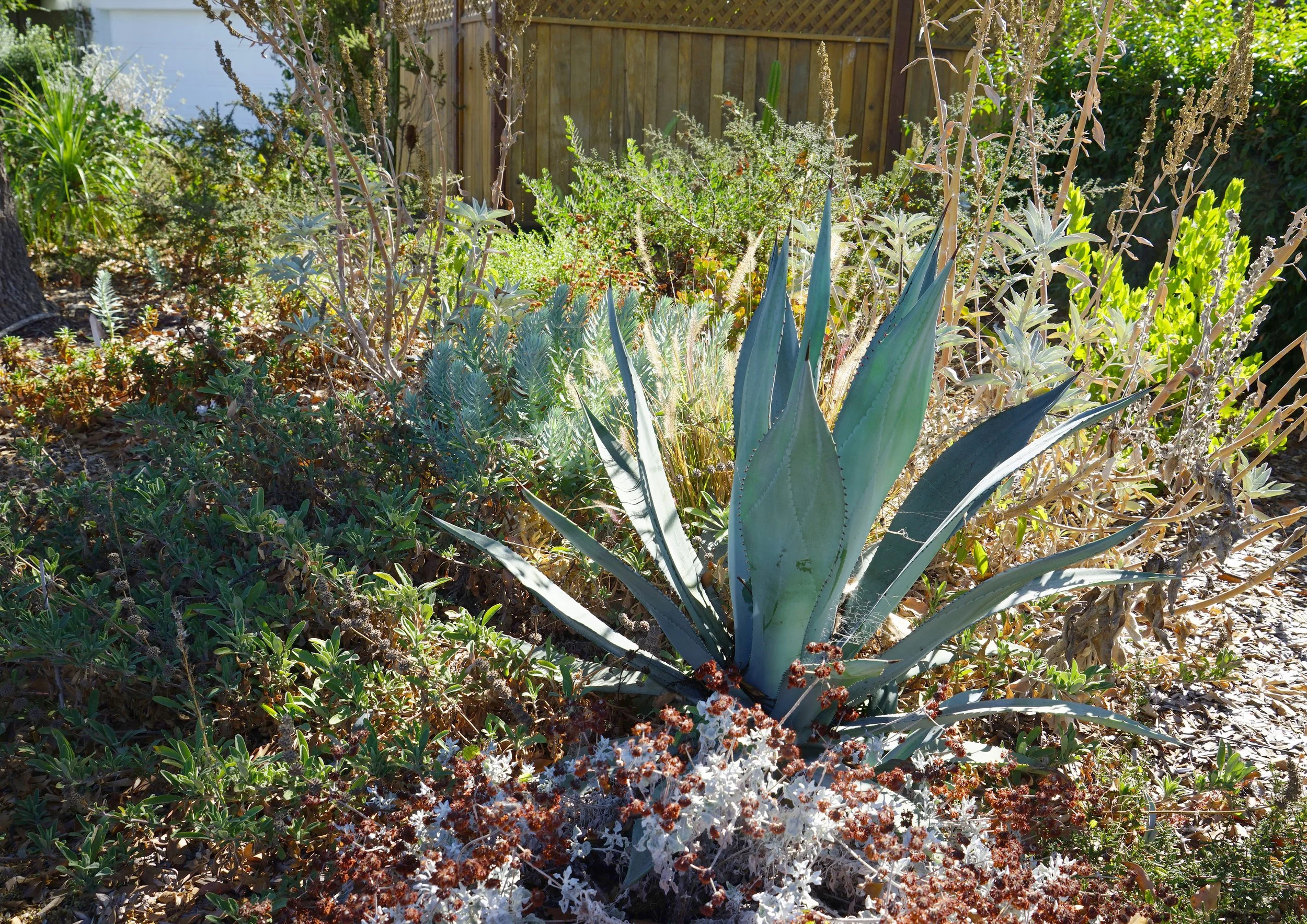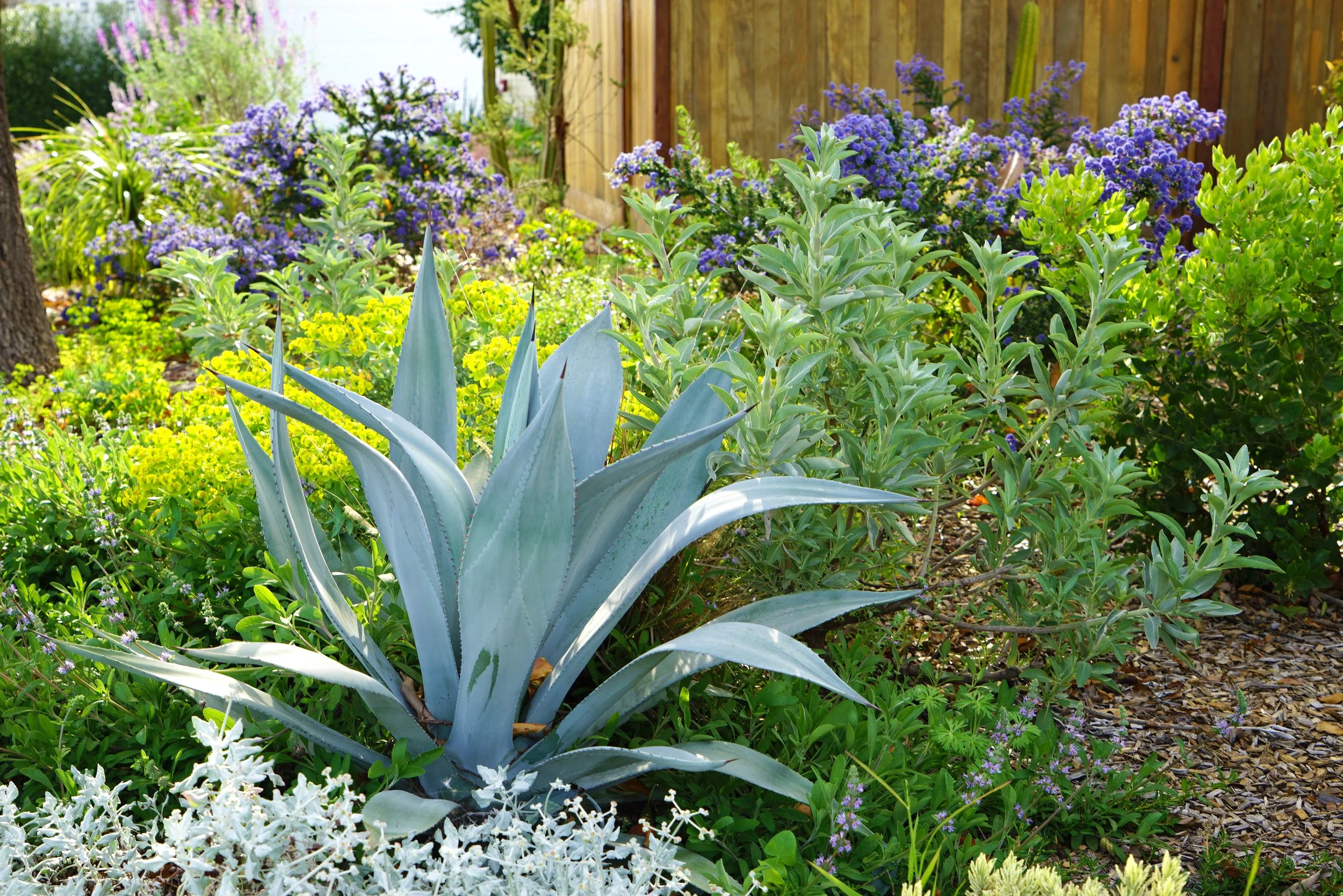
From lawn to garden - an eco approach to talk to nature
The process
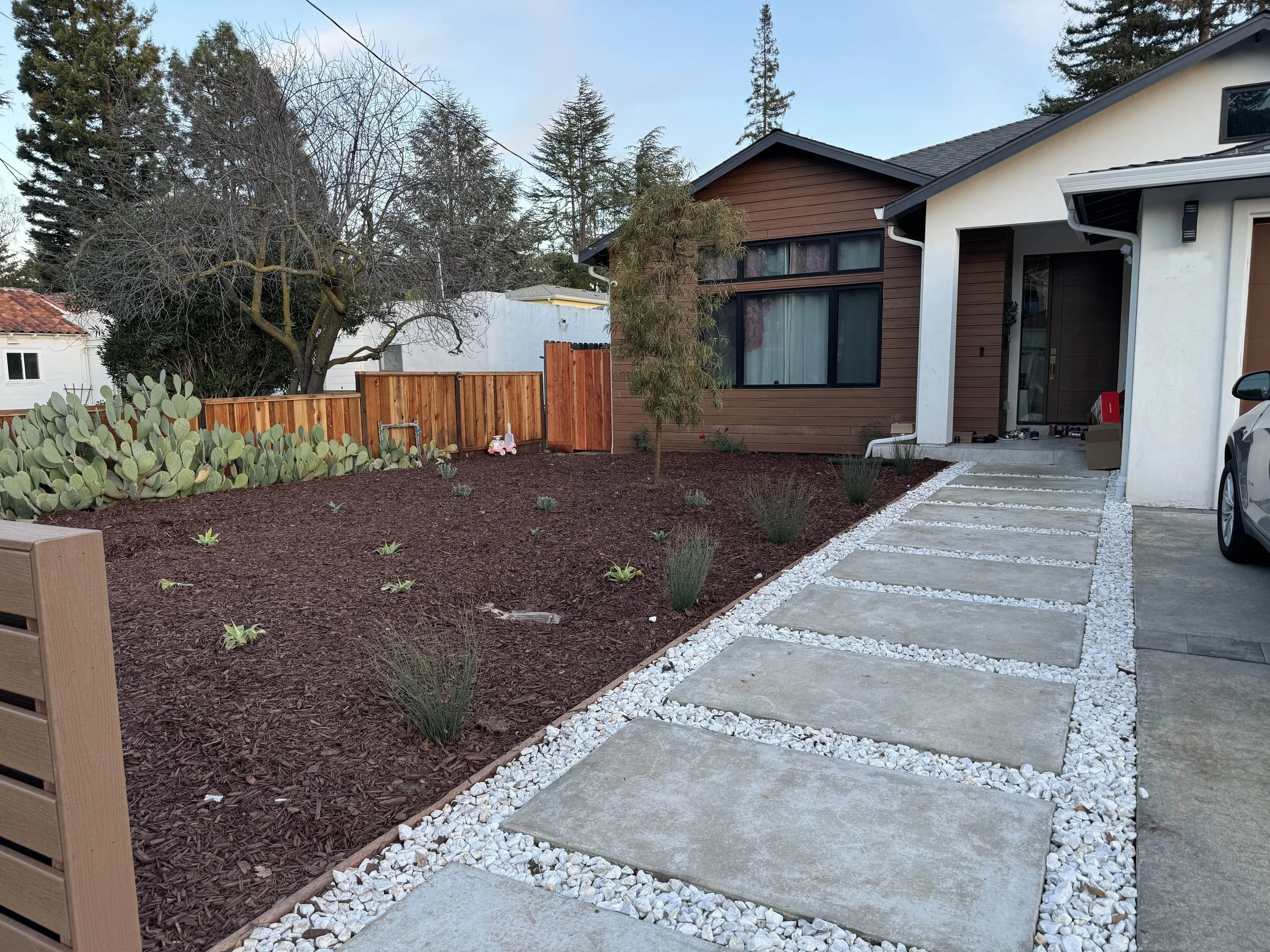
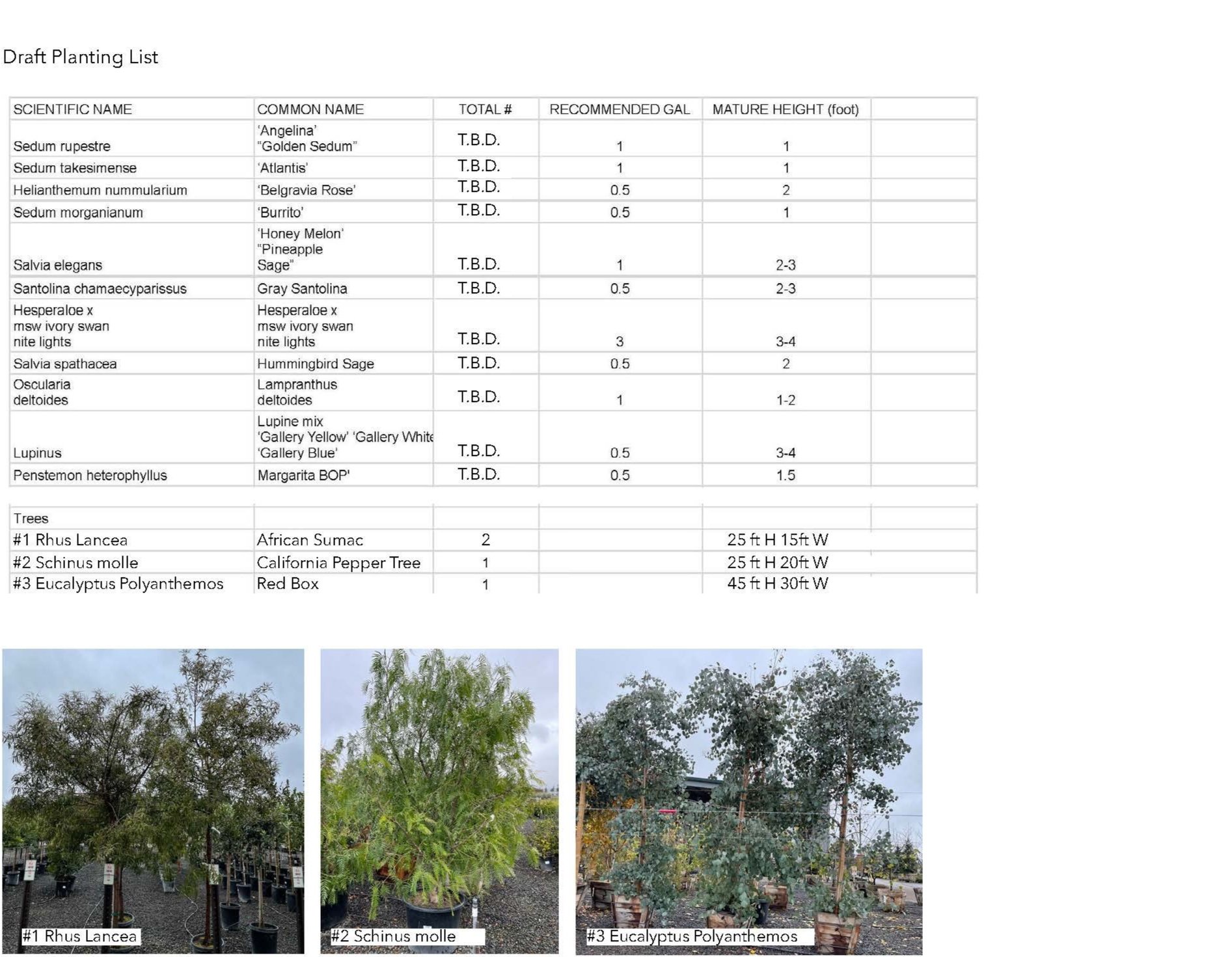
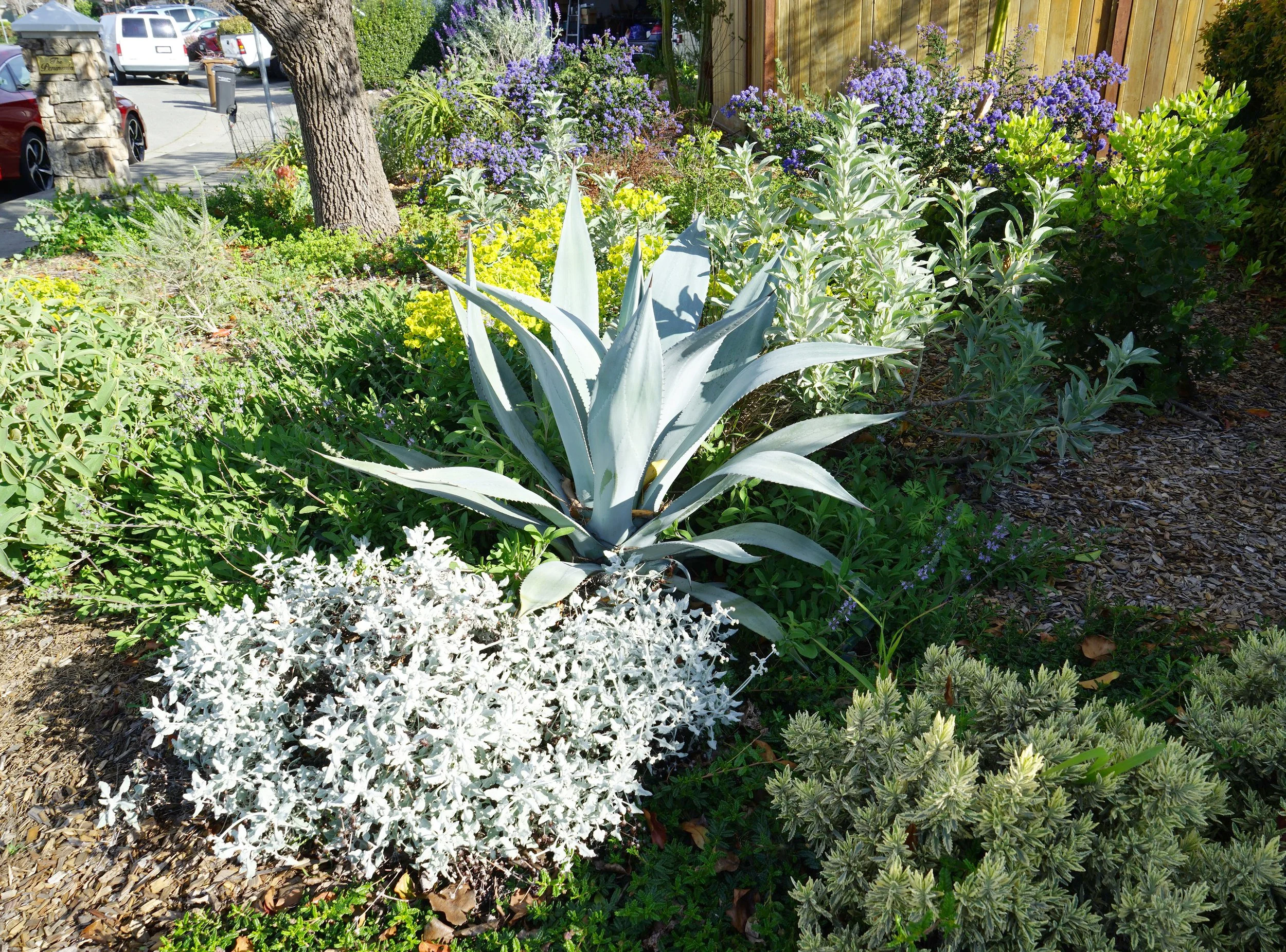
There are rebate programs across cities in the Bay Area to get a refund for converting lawns to CA native plant gardens. We will propose specific plants to meet the City's standards to pass the rebate program.
After the design is complete, we will start to ‘sheet mulch,’ a process of covering the lawn with cardboard, and add topsoil over it, with consideration of designated plants!
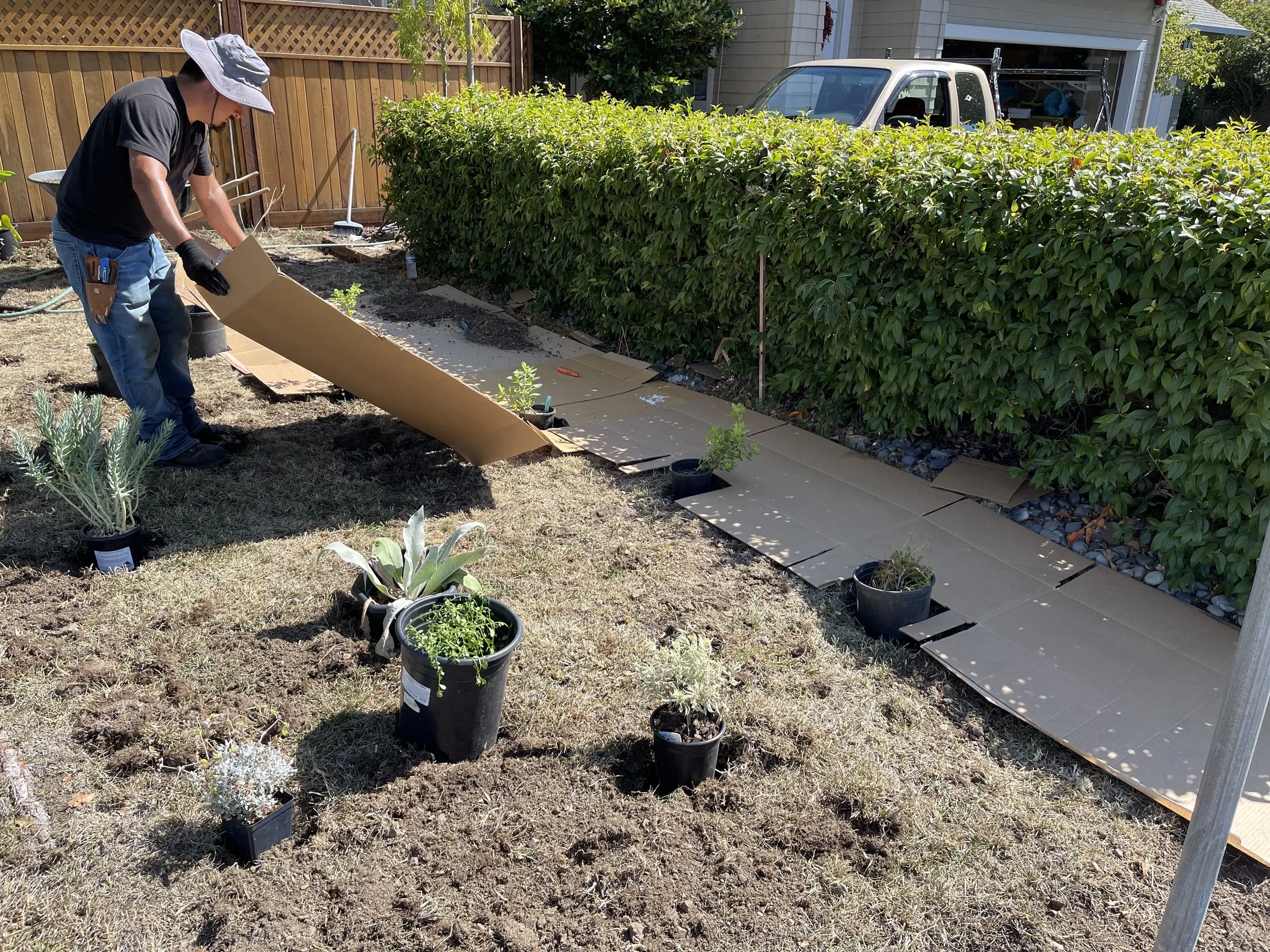
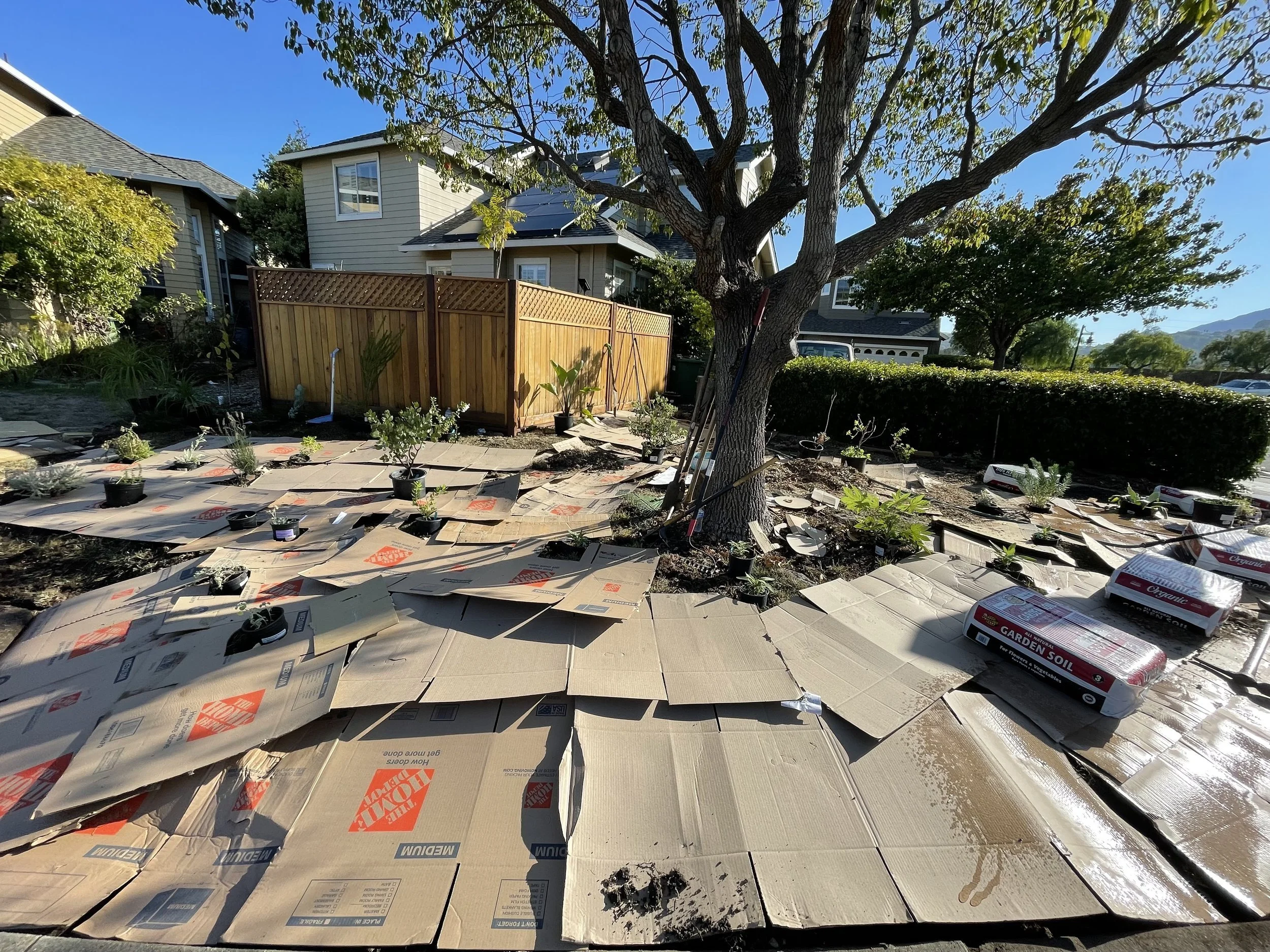
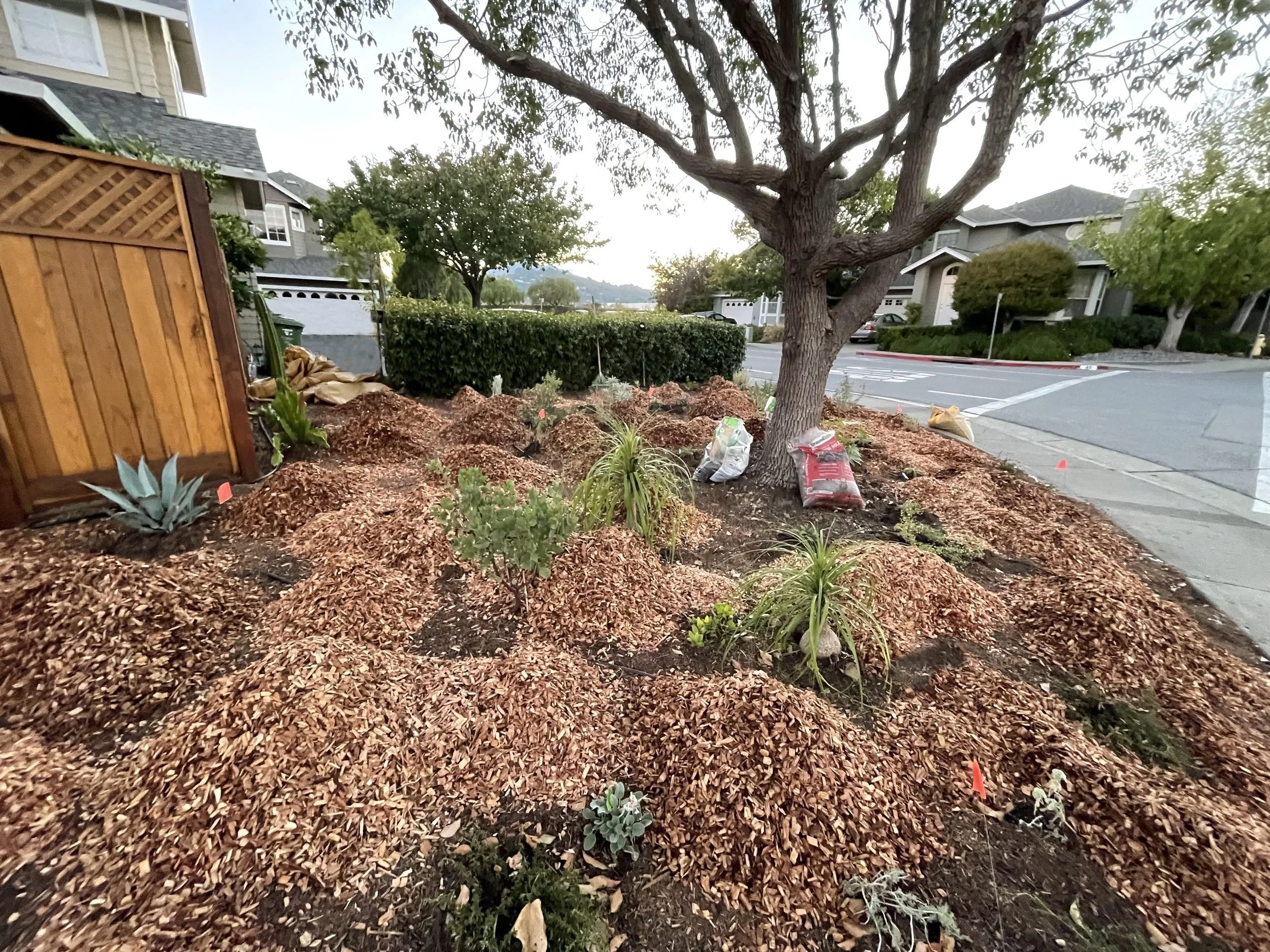
And yes, the topsoil will be covered with mulch, and the cardboard and lawn below it will decompose and become part of nutrient, supporting new plants
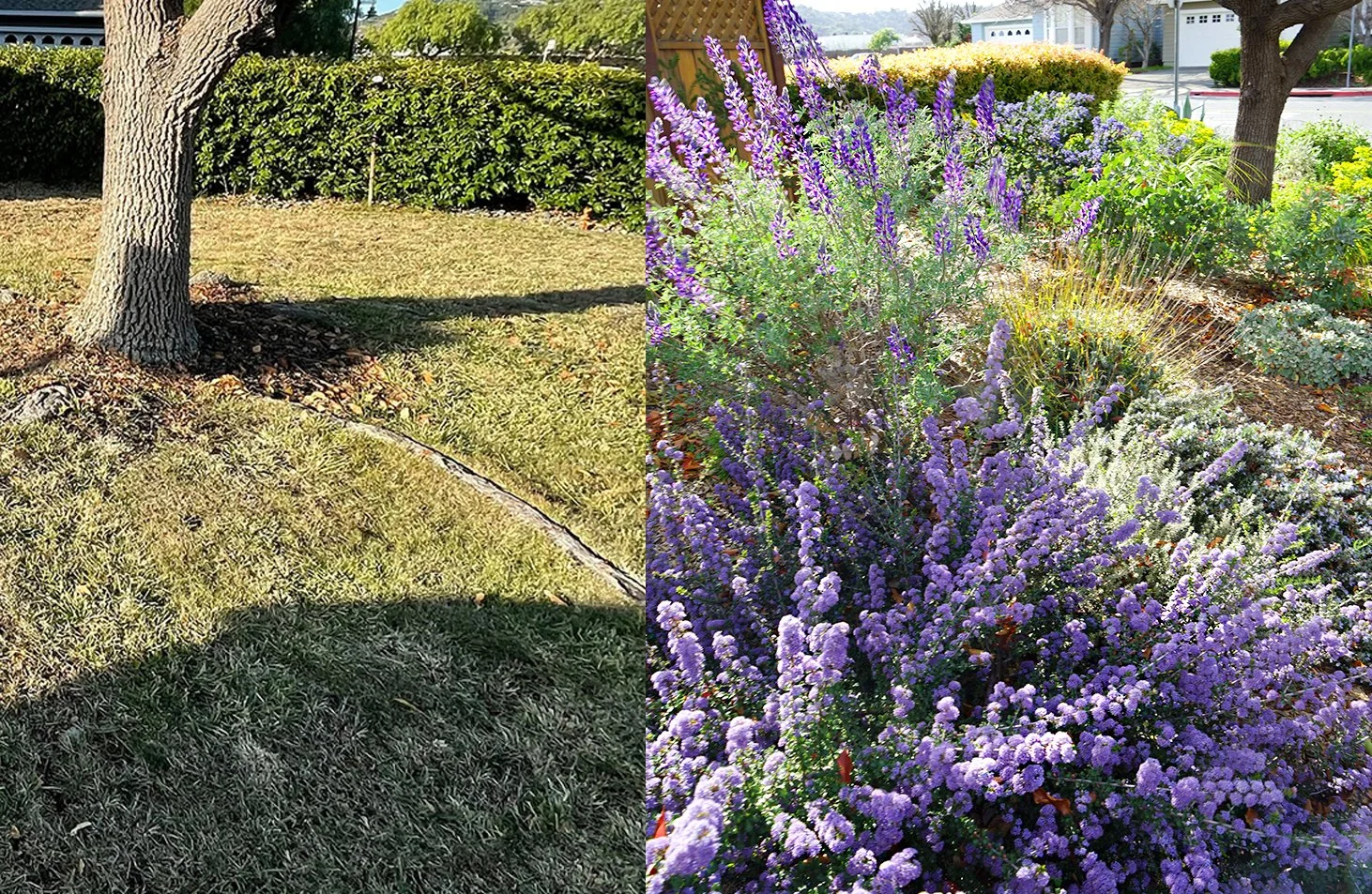
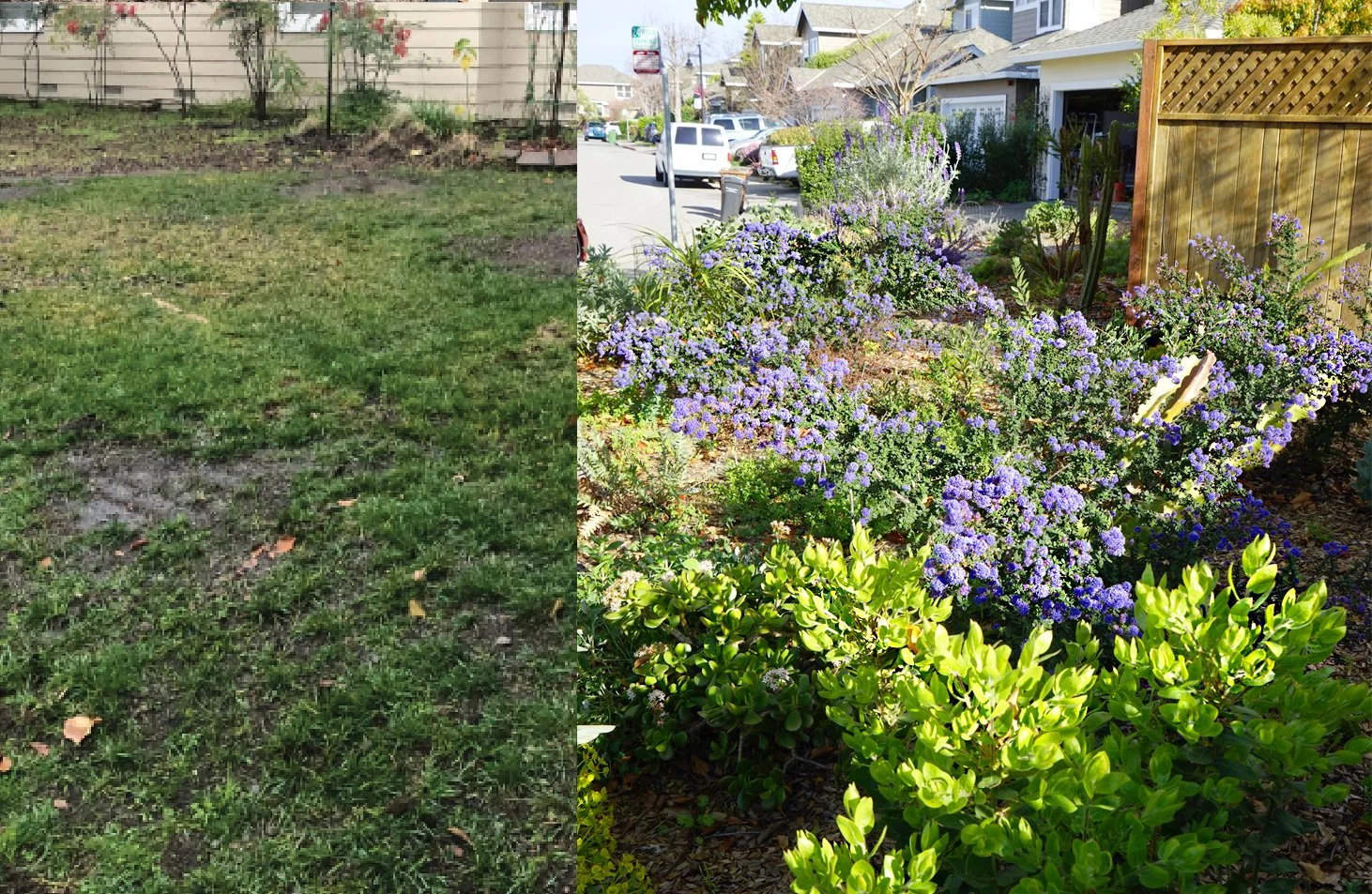
View more projects
-
![A backyard kitchen]()
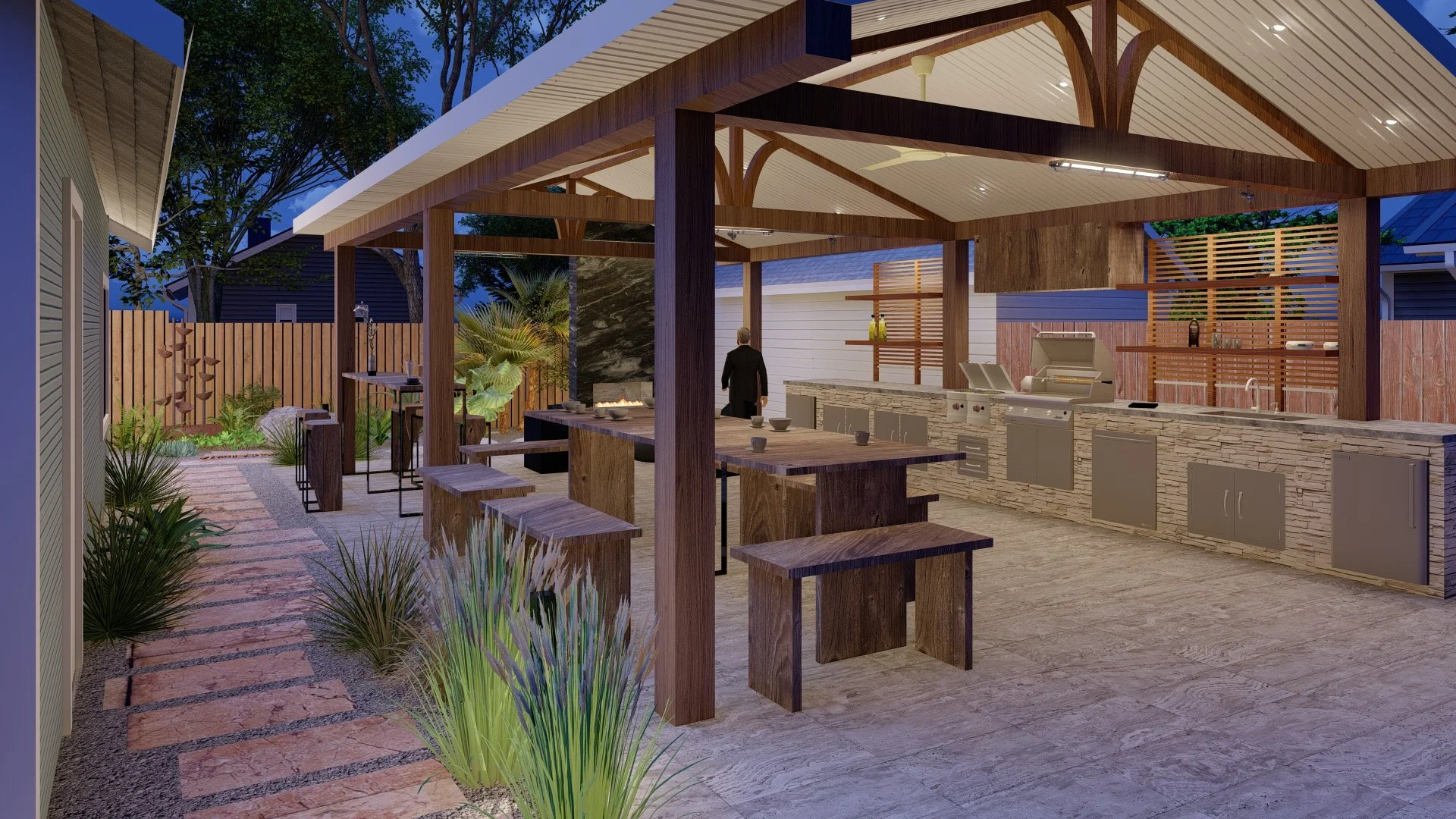
Backyard Kitchen
Structural Concept + Landscape Design
Napa, CA
-
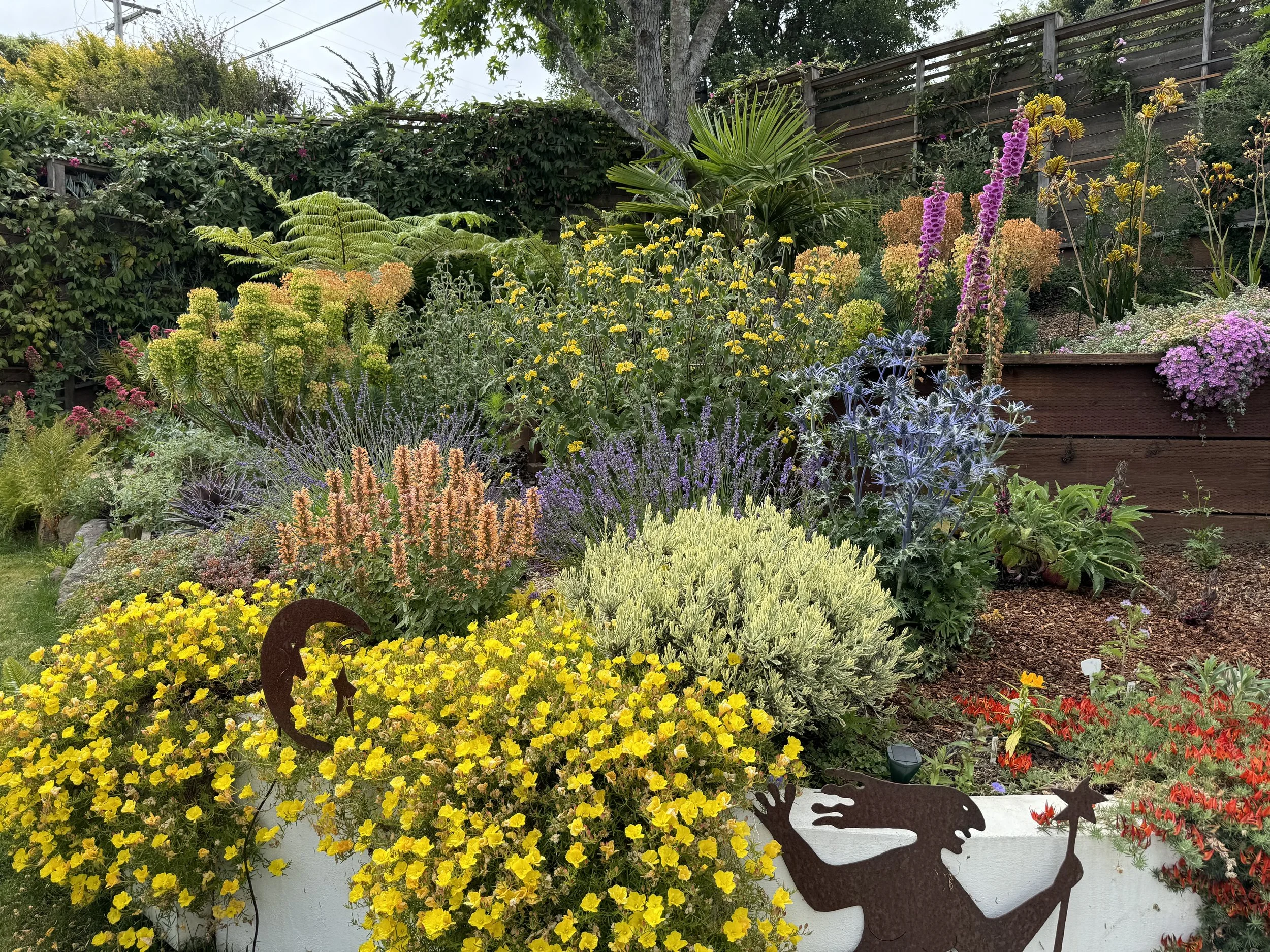
![Birds' Starbucks]()
Birds' Starbucks
Landscape Design + Consultation
Mill Valley, CA
-
![Full yard design service]()
Los Robles
Full Yard Landscape Design
Palo Alto, CA
-
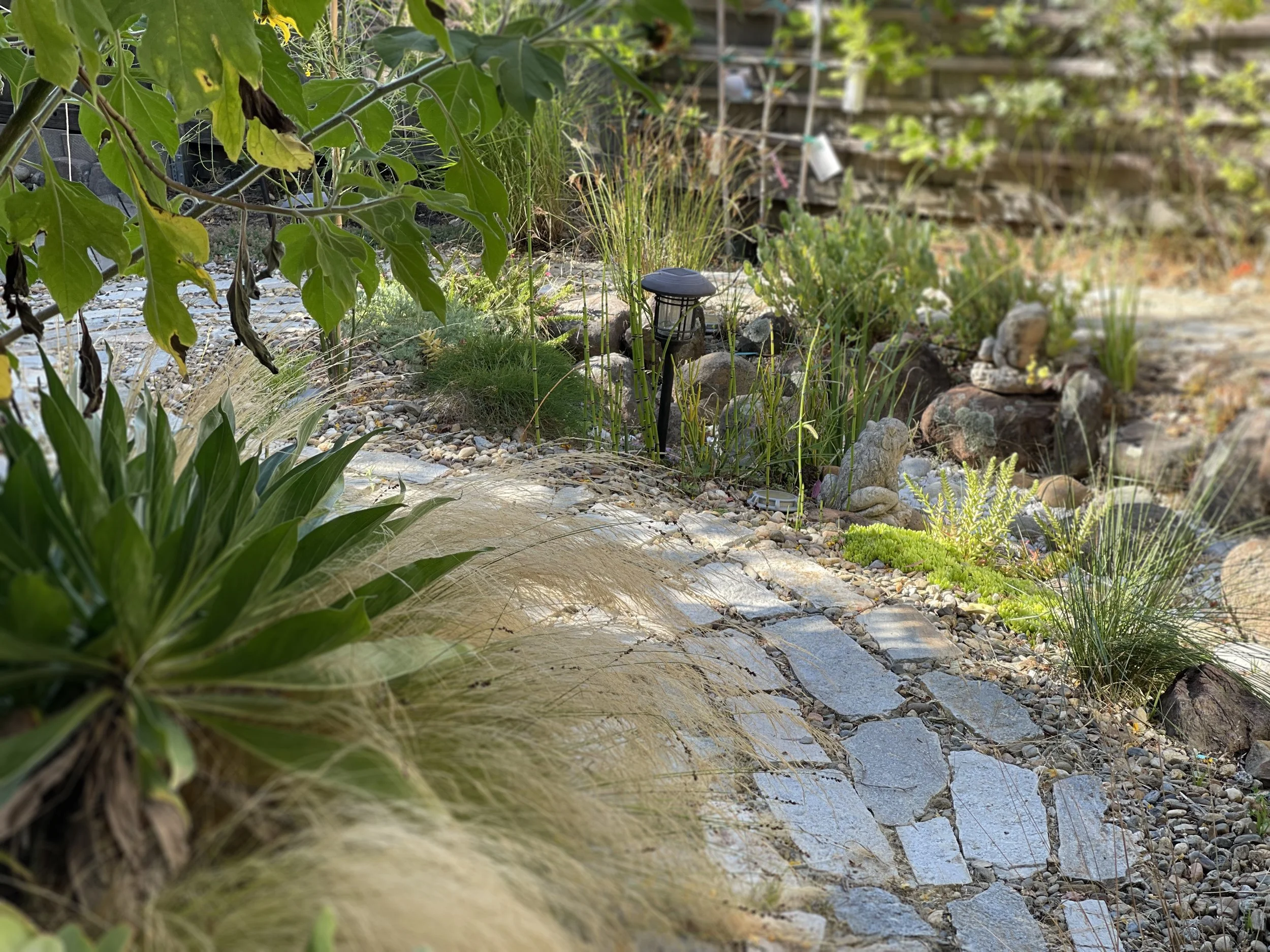
![120 stones]()
A path with 120 pieces of Rocky Mountain stone
Design + Build Example
Corte Madera, CA
-
![CA Native Plants Garden]()
CA Native Plants Garden
The Lawn Conversion Project
Larkspur, CA